Midnight Sun and Polar Night: How Latitude Reshapes Your Astronomy Calendar
Midnight Sun and Polar Night: How Latitude Reshapes Your Astronomy Calendar
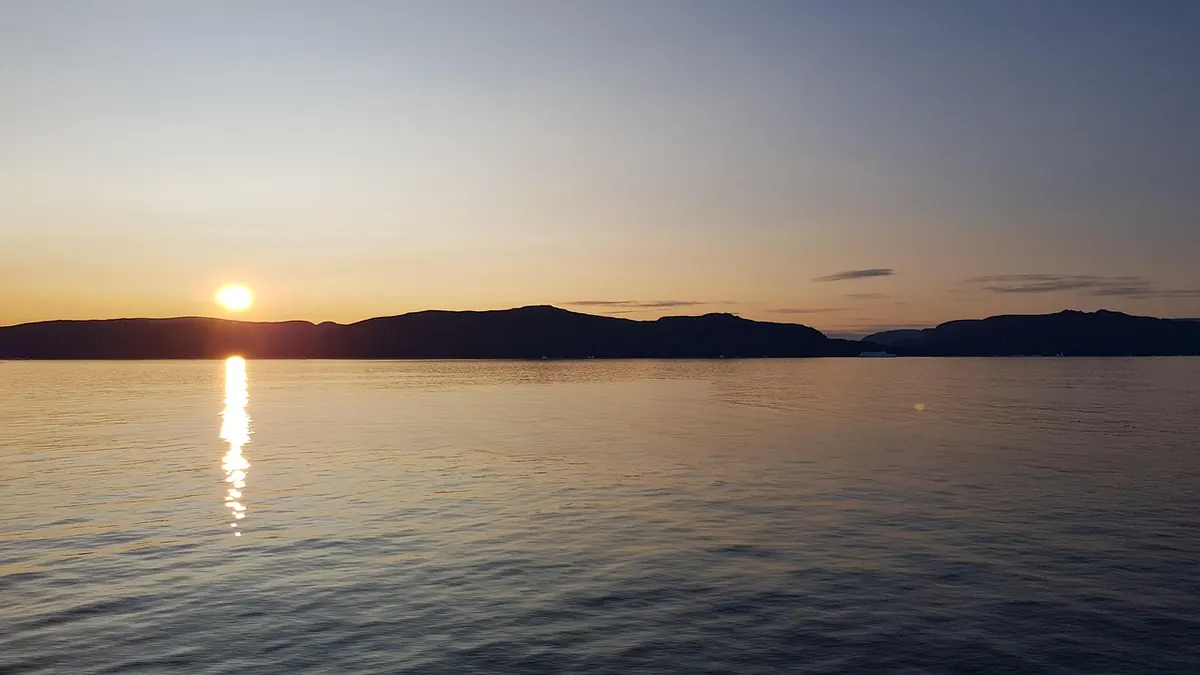
At one in the morning in late June, north of the Arctic Circle, the sky is a pale blue that never quite commits to darkness. The Sun has dipped to within a few degrees of the horizon, the birds are still singing, and the telescope you carried outside is pointed at a washed-out sky. Six months later, at noon, that same coastline is locked in a deep, indigo twilight—or in true darkness—while the Sun refuses to climb above the horizon. The landscape is the same, the telescope is the same, and the astronomer is the same. Only the calendar has changed.
This is the practical heart of high-latitude astronomy: your observing year is not simply divided into warm nights and cold nights. It is divided by geometry. Latitude decides when the Sun sets, how long twilight lingers, which stars never rise, which stars never set, and whether a January observing session is a leisurely all-nighter or a desperate race against frostbite and cloud. Midnight sun and polar night are the most dramatic expressions of that geometry, but they are not isolated curiosities. They are the visible edge of a much larger system that reshapes every part of an astronomy calendar.
What Midnight Sun and Polar Night Actually Are
Earth’s axis is tilted by about 23.4 degrees relative to its orbit around the Sun. That tilt is why we have seasons, and it is also why the polar regions experience such extreme daylength. Around the June solstice, the Northern Hemisphere leans toward the Sun, so the Arctic receives sunlight around the clock. Around the December solstice, the Northern Hemisphere leans away, and the Arctic can remain in shadow even at local noon. The Southern Hemisphere experiences the mirror image: polar night in June, midnight sun in December.
The familiar boundaries are the Arctic Circle and the Antarctic Circle, near 66.5 degrees north and south. At the Arctic Circle, the Sun is just barely above the horizon at local midnight around the June solstice, and just barely below the horizon at local noon around the December solstice. Move farther poleward, and the periods of continuous daylight and continuous darkness grow longer. At the North Pole, there is roughly six months of day followed by six months of night, with the Sun circling the horizon once per year rather than rising and setting each day.
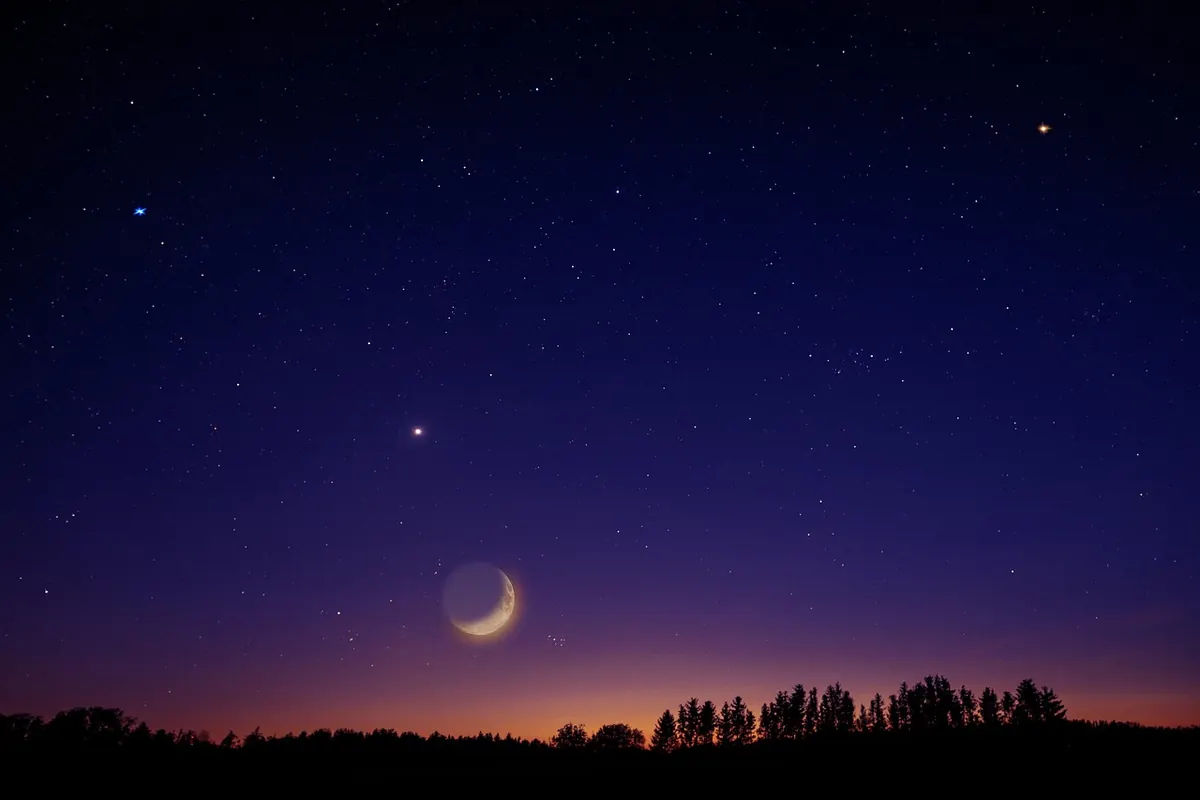
Polar night does not always mean pitch blackness. At high latitudes, the Sun can be below the horizon but still close enough to illuminate the upper atmosphere. Civil twilight, when the Sun is less than 6 degrees below the horizon, can produce a luminous blue or orange glow. Nautical twilight extends to about 12 degrees below the horizon, and astronomical twilight extends to about 18 degrees. During polar night at moderate Arctic latitudes, you may spend weeks in civil or nautical twilight rather than true astronomical darkness. That matters enormously for deep-sky observing.
At high latitude, darkness is not a switch. It is a gradient, and your observing calendar has to be built along that gradient.
Latitude Is a Switchboard for Your Observing Year
Astronomers often talk about “observing season” as if it were universal. It is not. A latitude change of 20 or 30 degrees can transform the year. Near the equator, day and night remain roughly balanced all year, so deep-sky observing is possible on almost any clear night. At mid-latitudes, summer brings short nights and long twilight, while winter brings long, dark nights but also cold and unsettled weather. At high latitudes, the year becomes far more polarized: summer can be nearly useless for faint objects, while winter can offer extraordinary darkness—if the sky is clear and your equipment survives the cold.
- Near the equator: Roughly 12 hours of day and night year-round; the full celestial sphere is visible over the course of a year; twilight is short; deep-sky observing is less seasonally constrained.
- Mid-latitudes, around 30–50 degrees: Clear seasonal changes; summer nights are short and bright, winter nights are long and dark; some southern or northern objects are permanently below the horizon.
- Around 51.5 degrees north, near London: Around the June solstice, the Sun never gets far enough below the horizon for true astronomical darkness, so faint nebulae and galaxies are effectively off the menu for several weeks.
- Around 60 degrees north: Late-spring and summer nights remain in twilight all night; true darkness disappears near the solstice, even though the Sun itself still sets.
- Around the Arctic Circle, near 66.5 degrees: At least one midnight sun and one polar night occur each year; the exact dates depend on refraction and the Sun’s apparent size.
- Around 70 degrees north: The midnight sun lasts for roughly two and a half months, and polar night lasts for several weeks; the Sun may remain below the horizon even at noon.
- At the poles: One sunrise and one sunset per year; months of continuous daylight followed by months of continuous darkness; all visible stars are circumpolar.
These boundaries are approximate. Atmospheric refraction lifts the Sun’s apparent position by about half a degree, and the Sun’s disk has angular size. As a result, the midnight sun can be seen slightly equatorward of the Arctic Circle, while true polar night—where the Sun’s disk stays entirely below the horizon—begins slightly poleward of it. For calendar planning, treat the circles as guides rather than razor-sharp lines.
How the Calendar Changes in Practice
At 65 degrees north in late June, the sky may never cross into astronomical twilight. If you drive your telescope to a dark site, you may still see the Milky Way as a faint suggestion, but faint galaxies, emission nebulae, and subtle globular clusters lose contrast. The practical response is to change targets rather than fight the sky. Summer becomes the season for the Sun, the Moon, bright double stars, colorful carbon stars, and atmospheric phenomena such as noctilucent clouds. With a proper solar filter, the long daylight hours become an advantage: you can observe sunspots, prominences, and the granulation of the solar surface without staying up until 3 a.m.
Winter flips the equation. At 70 degrees north in December, the Sun may not rise at all, but the sky at noon can still glow with civil twilight. By mid-afternoon, true darkness arrives, and it may last well into the next morning. That is a gift for deep-sky observers—except that the same season brings snow, wind, and temperatures that can make metal telescope parts painful to touch and battery performance unreliable. The calendar must account for weather and safety, not just darkness.
- Late spring and summer: Prioritize solar observing, lunar observing, bright stars, double stars, and noctilucent clouds; use the twilight glow as part of the experience rather than an enemy.
- Shoulder seasons: Watch for the first and last dates of astronomical darkness; these are often the most productive nights because the sky is dark enough for deep-sky work but the weather is still manageable.
- Late autumn and winter: Plan deep-sky marathons, long-exposure astrophotography, and aurora watching; build in warm-up breaks and keep gear simple and reliable.
- Polar night: Use the long darkness for faint targets, but check whether your location actually reaches astronomical twilight; many Arctic polar-night weeks are brighter than beginners expect.
Latitude Also Changes What You Can See
Midnight sun and polar night are the headline effects, but latitude also controls the geometry of the night sky. At a latitude of 70 degrees north, the celestial equator sits only about 20 degrees above the southern horizon at its highest point. Objects with declinations below about minus 20 degrees never rise at all. At 40 degrees north, the celestial equator reaches about 50 degrees above the southern horizon, and objects below minus 50 degrees never rise. At the equator, every part of the celestial sphere rises and sets over the course of a year.
This has a direct effect on target planning. An observer in northern Scotland or southern Scandinavia cannot treat Sagittarius and Scorpius the way an observer in Arizona or Chile can; those constellations may be low, clipped by horizon haze, or entirely invisible. Conversely, northern circumpolar constellations such as Cassiopeia, Ursa Major, and Draco become familiar companions that never set. The Moon and planets follow the same rules. Near the solstices, a high-declination Moon can stay above the horizon for days at a time at extreme latitudes, while a low-declination Moon may barely peek above the horizon. Your calendar should note not only when an object is up, but whether it rises at all.
A Sample Year at 69 Degrees North
Imagine an observing site at 69 degrees north. In January, the Sun stays below the horizon, but the noon sky may still show a blue twilight; the nights are long, dark, and cold. In February and March, the Sun returns, and the first genuinely dark evenings arrive with reasonable temperatures. April and May bring rapidly lengthening days; by late May, the midnight sun begins, and deep-sky observing ends. June and July are for solar filters, lunar phases, bright doubles, and the strange beauty of a sky that never darkens. August brings the first usable darkness back, often with mild weather. September and October are prime deep-sky months, with long nights and a still-favorable climate. November slides into polar night, and December offers near-continuous darkness—but also the harshest conditions and the greatest chance of cloud.
Planning Your Own High-Latitude Astronomy Calendar
A good astronomy calendar for high latitudes is part almanac, part survival guide, and part target list. Start with your exact latitude and local horizon, then build the year around twilight rather than around sunset alone.
- Find your latitude and local horizon: Note obstructions to the north and south; at high latitude, a low southern horizon can make the difference between seeing a planet and missing it entirely.
- Mark your twilight boundaries: Identify the dates when astronomical twilight disappears in summer and when polar night begins in winter; use a planetarium program or published almanac for your location.
- Classify targets by declination: Separate circumpolar objects, objects that rise and set, and objects that never rise; this prevents wasted observing time.
- Plan summer for bright and solar targets: Use solar filters, observe the Moon, split double stars, and chase atmospheric phenomena; save faint galaxies for darker months.
- Plan winter for deep-sky work—but respect the cold: Keep sessions shorter, use insulated layers, protect batteries, and have a warm backup plan.
- Watch the shoulder seasons: The first and last dark nights of the season are often the most valuable; mark them early and keep your equipment ready.
- Leave room for surprise: Aurora, meteor showers, and clear polar-night skies do not always cooperate with a rigid calendar; flexibility is part of high-latitude observing.
Midnight sun and polar night are more than scenic curiosities. They are the clearest signs that astronomy is a local activity. The sky above your telescope is shaped by where you stand on the globe, and the calendar in your notebook should be shaped by the same geometry. Once you plan around latitude—rather than against it—the long days and long nights stop being obstacles and become the structure of a richer observing year.
Photo: highflyer100 / Pixabay